
For podcast hosts and producers · Sugar
Exposing Sugar Toxicity: A Clinical Perspective
Dr. Carolyn Dean, MD ND, has been warning people about sugar for more than thirty years, and before she finished the book she read a dozen others on the subject. What she found was that none of them mention what sugar takes out of the body as it passes through, the minerals it draws on, which she calls the big picture the others are missing. The book asks why a food this ordinary is still argued over, and the answer reaches into every meal, every label and every crash an hour after breakfast.
Not empty calories. A dose the body has to answer.
Sugar brings the body no nutrients of its own; it is a dose the body has to answer. The blood carries about two teaspoons of it at any moment, so a sweet drink arrives as an alarm rather than a meal, and the insulin that answers it is what drives the crash and the next craving. Refining strips a cane or a beet of the minerals it grew with, so the body spends its own, and glucose competes with vitamin C for the same door into the cell. So what you eat on an ordinary day decides how much the body is answering, and what it runs short of while it does.
Six doorways into the subject. Open one, and you have Dr. Dean for the hour.
You know sugar is bad for you. You have not heard why.
You have known sugar is bad for you your whole life, and you have probably cut back. What you have not heard: the blood holds two teaspoons of sugar and a can of soda delivers ten, the trials that cleared sugar on children’s behaviour lasted three hours, and four in ten American adults now live with obesity, up from three in ten twenty years ago. That is the hour. Not a diet pitch, but the open questions, one mechanism you can picture, and one experiment you can run yourself. No product, no dose, no brand. And with six ways into the subject, the hour on your show will not be the hour heard on another.
You quit sugar for a week and felt worse before better.
Irritability, poor sleep, an upset stomach and a craving that arrives on schedule: she has watched that week for decades and calls it what it looks like, a withdrawal, while saying plainly that nobody has studied it properly. She explains why the first days are hardest, and how her three-week test settles it. Her line for it: “Sugar is a slow poison, and any amount taken regularly may be harmful in the long run.”Your child turns into someone else after a party.
Six clean days and one Saturday of unlimited junk, and most children connect the tummy ache, the headache and the mood to the sugar without being told. She tells it as the family doctor who watched the waiting room fill after Halloween, sets it beside the school studies that took sugar away from thousands of children, and shows a parent how to let the child draw the conclusion, which outlasts any lecture.You read labels and still cannot find the sugar.
Ketchup can carry a higher share of sugar than ice cream, and a salad dressing can out-sweeten a cola. She reads a label the way she reads it herself: three sugars listed under three names so none has to come first, the stealth sugars that never say sugar, and the teaspoon arithmetic, a little over four grams to the spoon, that turns a day of labels into a number you can picture.You feel shaky and anxious an hour after breakfast.
The blood carries about two teaspoons of sugar at any moment, and a single sweet drink delivers ten. What follows is a surge, an over-correction, and the adrenaline the body uses to catch the fall. She keeps this to physiology, the roller coaster as she calls it, without turning it into a diagnosis, and explains why a feeling that passes for nerves can begin on a plate and end an hour later.You cook for a parent who lives on toast and biscuits.
Soft, sweet, easy food is what an older appetite reaches for, and it gives the least back. She explains what refining strips out of a grain or a cane before it reaches the plate, why a diet built on sweetness draws down the minerals the body runs on, and why a harm that takes decades to show is never connected to the biscuit tin. It is about the dose, and she says so.You were told sugar only ever hurts your teeth.
Teeth are the one harm the industry has conceded, and she starts there, in a 1951 hearing room where a Navy nutritionist had dissolved teeth in cola and nobody could say who approved what went into a soft drink. From there to the WHO’s ten percent, then five, and what the industry threatened when the number was published. She is candid about why the record is thin: fifty years ago the industry began funding it.What to expect from the hour
| Her manner | She teaches rather than pitches, and names the limits of the evidence before you ask. |
| Pushback | Sceptical questions are welcome. She is comfortable being pushed, and the segment is better for it. |
| Her limits | She will not diagnose a listener, give a dose or a diet plan, or name a product on air. |
| The arc | Open in a 1951 hearing room where teeth dissolve in cola. Land in 2018, when the industry’s own files were published. |
| The logistics | Thirty to ninety minutes, remote, on your platform. Review copy and a question set for your doorway arrive first. |
Why she wrote it, and what she argues
All these prominent writers are missing the big picture of nutrient depletion as the reason sugar is so bad for us.
Dr. Carolyn Dean, MD ND Exposing Sugar Toxicity: A Clinical Perspective
-
The primary reference
Exposing Sugar Toxicity: A Clinical Perspective
Most people think they know the case against sugar: calories, cavities, a waistline. Her opening claim is that a dozen recent books on the subject tell that story and miss the bigger one, what sugar takes out of the body as it passes through, the minerals it draws on and the yeast it feeds. The book reads the research as it stood before the industry began funding it, sets the two teaspoons in the blood against the ten in a can, and asks why a food this ordinary is still argued over. She does not claim the case is closed. She says plainly which effects are still unproven, and why nobody has run the trial that would settle them.
Read more on DrCarolynDean.com (opens in a new tab) -
The practical close
The Sugar-Free Kitchen: 88 Recipes for a Yeast-Free Life
The daily do, as it calls itself: 88 dairy-free, sugar-free recipes, each tagged for the phase it belongs to, a seven-day menu with its shopping list, the food lists, and the tips that make the change workable in a real household. It points back to the first book for the science, which is why the two sit together here.
Read more on DrCarolynDean.com (opens in a new tab)
Where the book ends and the hour begins
Five things people are not being told. Do they fit your show?
Read the five against your audience. The book is where each one is made in full; the hour is where they meet your listeners, as mechanism and history rather than a protocol, and it lands hardest on parenting, metabolic, food and cooking, and medical freedom shows. If they hold for your show, the fit is real, and if one does not, say so and she will shape the hour around what does. And if the hour lands, the vitamin C conversation follows directly from it, since sugar and vitamin C share a door into the cell, and makes an easy second booking.
Five things she teaches, and who needs to hear them
| The blood carries about two teaspoons of sugar, and one can of soda delivers ten. | For the listener who wants the model: one number that explains the surge, the crash and the next craving without a hormone chart. |
| Three weeks off sugar, then one large serving, is her test of whether it is a problem for you. | For the listener who arrives with a symptom and a diet: a self-experiment with a start date, an end date and a result they can feel rather than a lab value. |
| A child given six clean days and one junk Saturday usually draws the conclusion alone. | For the caregiver in the audience: a way to let the child connect the tummy ache, the headache and the mood to the sugar, which she found outlasts any lecture. |
| Glucose and vitamin C share the same insulin-mediated door into the cell. | For the practitioner listening: a mechanism that turns sugar and immune function from a slogan into a competition at a transporter, with the older white cell studies labelled for what they are. |
| The two sides of the sugar and behaviour debate have never run the same experiment. | For the listener already acting who wants to know why the case is still open: three hours on one side, thousands of children for years on the other, and her own concession that it is unproven. |
Guardrails, so nothing has to be cut in post
- What she claims. A dose the body was not built for, and the nutrients it spends answering it. Not that cutting sugar treats, cures or prevents any named disease.
- What she will not do on air. Diagnose a listener, give a dose or a diet plan, or name a product. Her own ceiling on fruit and carbohydrate exists in print, and she leaves it there.
- How she handles thin evidence. Where a study is old, small, industry funded or her own clinical observation, she says so as she goes, not afterwards. Her references run to the 1970s and 1980s, and she tells you why.
- The line she stays on, and why it helps you. Describing what the body does with a teaspoon of sugar is conversation; saying that a diet treats, cures or prevents a disease is a drug claim, and the FDA and FTC listen to podcasts too. She stays on the first side by habit, so nothing needs a disclaimer bolted on afterwards. Nothing is sold through the hour, so there is no arrangement for you to disclose; if you link the book, saying it is hers is the whole of it.
- What that means for you. A segment that holds up with a scientifically literate audience and needs no compliance edit before it ships. If your platform has a health-claims policy, send it with the booking and she will record inside it.
More of what people are not being told
Five subjects, one guest, and each one is a conversation your audience has not heard properly. If a different one fits your listeners better, take it. The booking request is the same either way.

Who she is, and how to book her
Credentials, media record, format and terms, and the booking request. Everything that is true whichever subject you pick.
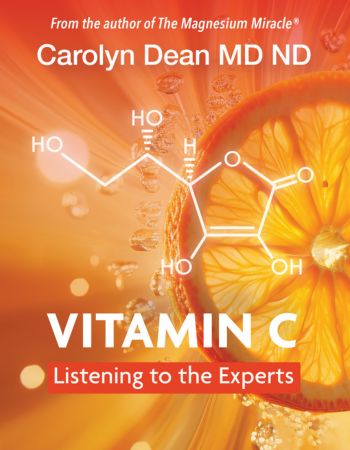
Vitamin C: Listening to the Experts
A nutrient everyone recognises and almost nobody has studied properly.

Magnesium: The Missing Link to Total Health
A testing failure, not a supplement pitch.

Death by Modern Medicine
Iatrogenic harm read as a system property.
Measuring Aging: The Maui ReSet Pilot Study
How ageing is measured, and what ten people’s clocks did in six months.