From the Desk of Carolyn Dean MD ND
“Vagus nerve hacks” are trending across social media—but what most people don’t realize is how vagus nerve sugar toxicity may be the real issue behind nervous system dysfunction.They want to move out of chronic stress, out of that constant fight-or-flight state, and into something that finally feels like calm. Someone told them supporting their Vagus Nerve could help. But what if they are trying to hack the effects of a well known prescription drug?
Why the Vagus Nerve Is Trending on Social Media
The advice sounds simple enough:
- Cold exposure—ice baths, cold showers, or ice on the neck
- Humming or gargling to stimulate the throat
- Deep breathing exercises
These trends rarely address how sugar toxicity affects the vagus nerve, which is often the root cause of dysfunction.
I fully support the growing awareness around the nervous system. It’s long overdue.
But these one-minute trends encourage people to “hack” the vagus nerve without understanding what it is, what it does—or more importantly, what’s disrupting it in the first place.
When this system is disrupted, it’s often not random—it can be linked to underlying issues like vagus nerve sugar toxicity and metabolic imbalance.
What Is the Vagus Nerve?
The vagus nerve is one of the most important regulators of the parasympathetic nervous system—the system responsible for rest, repair, and recovery.
It is not a single pathway, but a vast network of nerve fibers extending from the brain into the:
- ears, eyes, and tongue
- esophagus and stomach
- pancreas, intestines, and liver
- heart and lungs
It continuously sends information back to the brain about the state of the body.
The vagus nerve helps regulate:
- breathing rate
- digestion and stomach emptying
- blood sugar balance
- appetite and satiety signals
- heart rate
- hormone release, including the stress response
When this system is functioning well, the body feels stable and responsive.
When it’s not, symptoms can begin to appear:
- chronic fatigue
- anxiety
- dizziness or vertigo
- heart palpitations or arrhythmia
- inflammation
- nausea, bloating, and digestive discomfort
In other words, the vagus nerve is not a simple “hackable switch”—it’s part of a deeply integrated system that reflects the overall health of the body. There’s nothing Simple about it at all.
What Disrupts the Vagus Nerve (And Why No One Talks About It)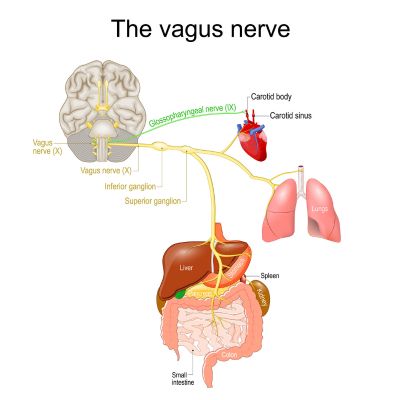
Social media trends depend on clicks and focus on rapid hacks that have nothing to do with long term solutions.
And like I said, what they don’t address is why the system is dysregulated to begin with.
In my experience, one of the most significant and overlooked disruptors is sugar toxicity.
This isn’t just about eating too much sugar—it’s about the downstream effects that follow:
- magnesium depletion
- unstable blood sugar
- yeast overgrowth
- hormonal disruption
These imbalances directly impair nervous system function, including the vagus nerve.
A cold plunge or breathing exercise may provide a few minutes of relief, but they cannot correct a system that is nutritionally depleted and metabolically unstable.
For the vagus nerve to function properly, the body requires:
- stable blood sugar
- adequate minerals—especially magnesium
- a balanced gut environment
Without these, the system cannot regulate itself effectively.
How Sugar Toxicity Disrupts the System
Excess sugar sets off a cascade of effects in the body:
- rapid blood sugar spikes and crashes
- depletion of key minerals and nutrients
- disruption of the gut microbiome
- displacement of vitamin C, keeping it from getting into cells
Over time, this creates a state of chronic stress within the body.
The impact on the vagus nerve becomes clear:
- Dysregulated stress response — feeling stuck in fight-or-flight, even at rest
- Disrupted appetite signaling — constant hunger with little sense of satiety
- Sluggish digestion — delayed gastric emptying and toxin buildup
This combination often leads to increased cravings, stress eating, and weight gain—not because of a lack of willpower, but because the system itself is out of balance.
The GLP-1 Trend and Vagus Nerve Dysfunction
With so many people caught in this cycle, it’s not surprising that medications like GLP-1 receptor agonists—such as Ozempic and Wegovy—have surged in popularity.
These drugs:
- slow digestion
- suppress appetite
- override natural hunger signals
But they do so without addressing the underlying dysfunction.
In a healthy body, GLP-1 is naturally produced in the gut and “guess what,” it works in conjunction with the vagus nerve to signal fullness.
Synthetic drug versions bypass the natural process, acting directly on the brain’s appetite centers rather than restoring the body’s natural regulation.
This can come with significant side effects, including:
- digestive discomfort
- fatigue
- low blood pressure or pulse
- headaches
- mental health changes
One of the more concerning effects is gastroparesis—delayed stomach emptying—where normal digestive signaling is impaired. In these cases, the natural coordination between the gut and the vagus nerve is disrupted rather than restored.
Why Vagus Nerve “Hacks” Don’t Work Long-Term
There is value in practices like deep breathing or cold exposure—they can support relaxation and momentarily shift the nervous system.
But they are not solutions to systemic imbalance.
No amount of “hacking” can compensate for:
- chronic sugar intake
- mineral depletion
- gut dysfunction
- drug intake!
Without addressing these foundational issues, the nervous system remains unstable beneath the surface.
The Missing Piece: Nutrients and Nervous System Health
What if the issue isn’t that your body is failing—but that it’s lacking the nutrients it needs to function properly?
Cravings, fatigue, and poor regulation are often signals—not of weakness—but of deficiency.
When the body lacks essential minerals and cofactors, it cannot maintain stable energy, mood, or appetite regulation.
Magnesium is one of the most important starting points.
It supports:
- nervous system regulation
- blood sugar balance
- muscle and nerve function
- stress response
When magnesium levels are restored, the body begins to stabilize—and the vagus nerve can function more effectively as part of that system.
A Better Way to Support Your Vagus Nerve
Rather than trying to override your body with quick fixes, the goal is to support it.
That means:
- stabilizing blood sugar
- restoring mineral balance
- supporting gut health
- allowing the nervous system to regulate naturally
From that foundation, practices like breathing exercises or gentle vagus nerve stimulation can become supportive tools—not substitutes for real healing.
If you want to better understand how sugar toxicity affects your system and how to address it at the root, I invite you to explore my book, Exposing Sugar Toxicity: A Clinical Perspective.
Because real change doesn’t come from hacking the system.
It comes from rebuilding it.
Join Us Live on Monday Night
Thank you for taking the time to read this blog.
Please join us live this Monday at 7 PM EST on Dr. Dean Live on YouTube.
If you can’t make it live, you can always watch the replay. And we’d love to hear from you—leave us a comment and tell us what you enjoyed about the episode and what part of the world you’re watching from.
📺 Watch here:
http://www.youtube.com/@drcarolyndean
We look forward to seeing you there.
This content is for educational purposes only and discusses nutritional and lifestyle support for normal structure and function of the body. It is not intended to diagnose, treat, or cure disease. Consult a qualified healthcare professional for personal medical guidance.
👉 About the book:
👉 Learn more and become a member here:
https://drcarolyndean.com/wellness-courses/