From the Desk of Carolyn Dean MD ND
Much of the immune system lives along the gut lining. Perhaps that’s why so many wellness conversations eventually come back to digestion. When we discuss gut health and healthy aging, we’re looking at another way our whole system works together.
I’ve studied gut research for decades, and I’m always curious about these connections.
In last week’s discussion of immune resilience, I looked at the immune markers from our Maui ReSet pilot study. Interestingly, immune resilience was the category that shifted the least. Several participants’ readings actually fell.
Those results sparked my curiosity.
The pilot followed ten people over six months. This was my own observational study, without a randomized control group. Therefore, we can’t say the protocol caused the changes we observed or that a larger group would have the same results.
Still, the findings raised a useful question for me: Should we have paid more attention to the gut earlier in the process?
After all, gut health and the microbiome are top of mind for many researchers.
Why Gut Health and Healthy Aging Belong Together
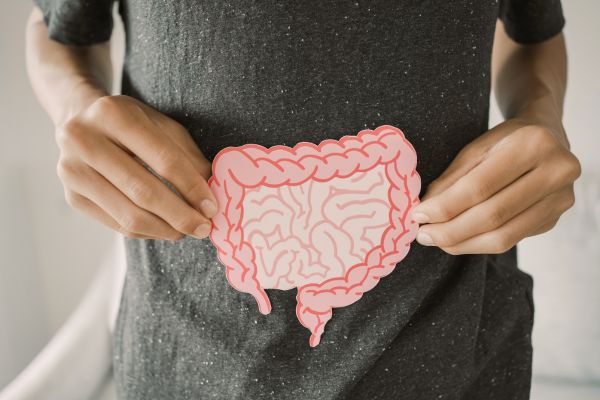
The gut is much more than a digestive passageway. In fact, the intestinal lining is an important interface between the outside world and the body’s internal environment.
It participates in digestion, nutrient absorption, and interactions with the immune system. Meanwhile, the community of microorganisms living in the digestive tract, the gut microbiome, is part of that picture.
As we learn more about the microbiome, it becomes increasingly difficult to discuss healthy aging without considering the gut.
That doesn’t mean every health question begins there. Nor does it mean changing gut bacteria will solve every problem. Instead, the gut deserves a place in a broader conversation about how the body functions over time.
What Researchers Say About the Gut and the Brain
One of the most interesting areas of microbiome research is the connection between the gut and the brain. You may have heard this called the gut–brain axis.
The term describes two-way communication between the digestive system and the brain. Several pathways carry these messages, including nerve signaling, immune activity, hormones, and substances produced by gut microorganisms.
This is more than a fashionable idea. Researchers are investigating how microbial activity may interact with brain chemistry and the body’s stress response.
However, we need to be careful about what the research can tell us.
What the Research Shows So Far
A 2025 review in Nature Mental Health examined the evidence linking gut microorganisms with mental health. Its title was “Distinguishing the causative, correlative and bidirectional roles of the gut microbiota in mental health.”
The authors examined animal and human research to distinguish cause, association, and two-way relationships. Although the findings are promising, the direction of these relationships remains an important question.
Diet, medication, sleep, stress, age, environment, and overall health can all influence the gut microbiome. At the same time, those factors may influence mood and brain function.
The gut and brain communicate. Exactly how particular microbial changes affect an individual’s mental health is more complicated.
Likewise, researchers are still investigating whether changing those microbes can reliably improve a mental health condition.
This is a young and fascinating field. We should be curious about it.
Serotonin: Another Reason to Stay Curious
For example, most of the body’s serotonin comes from specialized cells in the gut called enterochromaffin cells.
Research has also shown that certain gut bacteria can influence serotonin production by these cells. That gives us another example of microorganisms interacting with our own biology.
Take that, microbiome deniers!
However, gut serotonin does not simply travel into the brain. Serotonin produced outside the brain does not cross into the central nervous system, so the relationship with mood involves more than where serotonin is made.
Probiotics 101, in Plain Language
Let’s take a step back and look at probiotics themselves.
Probiotics are live microorganisms that can provide a health benefit when used in appropriate amounts. Some resemble microorganisms that naturally live in the human digestive tract. You’ll find them in certain foods and fermented products, as well as dietary supplements.
The gut microbiome is a community, with many different organisms and roles. For example, some microorganisms help break down food. Others produce substances that interact with the body.
Although the details are complex, these interactions are part of normal digestive function.
Different Strains Can Have Different Effects
One point worth remembering is that probiotics are not interchangeable.
There are hundreds of different strains, and formulations can have different effects. Therefore, evidence about one strain cannot automatically be applied to another.
Similarly, research on one probiotic product does not establish the benefits of every product on the market. Persuasive marketing will sometimes try to blur that distinction.
The National Center for Complementary and Integrative Health, part of the National Institutes of Health, emphasizes these uncertainties. We still have much to learn about which probiotics help with particular purposes, who may benefit, and their safety in different circumstances.
A Probiotic Is Different From a Laxative
I also want to distinguish a probiotic from a laxative, even though that may seem like common sense.
A probiotic provides live microorganisms. It is not designed to produce an immediate laxative effect.
People also often ask whether they should take a probiotic at a particular time of day. As a general starting point, follow the product’s directions and consider consistency within your overall routine.
Where Gut Support Fits in My Healthy-Aging Protocol
In my healthy-aging protocol, I recommend a two-phase structure.
First, we establish the seven-formula nutrient foundation. Then, during months four through six, the routine can expand with additional support.
This is where I introduce Flora ReVive and include Pico Silver as an optional addition, alongside Omega-3 Algae A+E.
The reasoning behind this sequence is straightforward: the seven foundational formulas come first. The second phase then adds a further focus on the microbiome and gut barrier.
However, this is how I have structured the protocol. It should not be confused with a result demonstrated by the Maui ReSet pilot.
What the Pilot Did and Did Not Test
Flora ReVive and Pico Silver were not part of the ten-person Maui ReSet pilot. Neither carries a biological-aging claim.
Instead, the pilot followed the seven-formula foundation. These two formulas are later additions described on the protocol pages, rather than products tested in that study.
That distinction matters when we discuss gut health and healthy aging. The pilot cannot tell us whether adding either formula would change biological age or immune markers.
Understanding the Two Formulas
My formula page describes Flora ReVive as a gut-support product containing Saccharomyces boulardii and humic/fulvic components. Its intended focus is healthy gut structure and function and everyday digestive balance.
Meanwhile, Pico Silver is a two-ingredient liquid containing stabilized picometer silver and purified water. It is an optional addition in the second half of my protocol.
You can read more on the Flora ReVive and Pico Silver formula pages.
Again, neither formula was evaluated in the Maui ReSet pilot. I am not suggesting that either lowers biological age, treats an infection, or produces a particular immune or mental-health outcome.
I am the founder and formulator of RnA ReSet and have a creative and economic interest in its products. Readers should take that relationship into account when considering the formula information.
The study’s biological-age testing was conducted by TruDiagnostic, an independent testing company.
Where the Gut Meets Mood: A Book Pairing
The gut–brain connection also brings me to a book that takes a broader, whole-body view of emotional well-being: The Complete Guide to Mental Health: A Total Body Approach to Emotional Well-Being.
The book’s description includes the gut microbiome and mood among its topics. I think that subject belongs in a wider discussion of health because the brain does not operate separately from the rest of the body.
Sleep, nutrition, physical health, social circumstances, and many other influences can all be relevant to emotional well-being.
However, I want to be careful about the message. Reading about the gut–brain connection does not mean that a probiotic, dietary change, or supplement can treat anxiety or depression.
Likewise, a discussion of the microbiome should never become a reason to delay professional support.
Mental health concerns deserve appropriate care. A whole-body perspective can sit alongside conventional assessment and treatment.
My website presents the book as an educational resource and a complement to conventional care. You can find its description under The Complete Guide to Mental Health.
Everyday Habits for Gut Health and Healthy Aging
Before we make gut health too complicated, it’s worth remembering that everyday habits matter.
Keep Meals Regular and Varied
Regular meals can help establish a dependable routine. In addition, eating a variety of plant foods brings different fibers and nutrients to the table.
That variety also provides different food sources for microorganisms living in the gut.
I don’t think we need to turn every meal into a microbiome project. A varied plate and regular nourishment are sensible places to begin.
Make Your Routine Manageable
Drinking enough water supports normal body function. Meanwhile, a routine you can manage in real life is easier to maintain than one that makes every meal feel complicated.
These are practical starting points, although individual needs differ.
If you have persistent or concerning digestive symptoms, discuss them with a healthcare professional. Everyday habits are part of looking after yourself, while ongoing symptoms may need a closer look.
The Gut Is Part of the Bigger Picture
The more we learn about the gut, the more interesting the conversation becomes.
We can see why the intestinal lining matters to immune function. Likewise, we can appreciate why researchers study communication between gut microbes and the brain.
Together, these connections help explain why gut health and healthy aging belong in the same conversation.
Even so, important questions about cause and effect remain. Probiotics are not all the same, and promising research does not establish the benefits of every formula.
For me, the value lies in understanding the body as a connected system. From there, we can make thoughtful choices based on what the evidence actually supports.
Next, on November 19, I’ll turn to another seasonal subject: staying calm through the holidays.
After all, healthy habits should support the life we’re living, without becoming another source of pressure.
To learn more, read about the second phase of the healthy-aging protocol and explore the formula information for Flora ReVive and Pico Silver.
This content is for educational purposes only and discusses nutritional and lifestyle support for normal structure and function of the body. It is not intended to diagnose, treat, or cure disease. Consult a qualified healthcare professional for personal medical guidance.
👉 Learn more and become a member here:
https://drcarolyndean.com/wellness-courses/