From the Desk of Carolyn Dean MD ND
“Stress burns through your magnesium, and low magnesium makes stress hit harder.”
Those are my words, and they describe a loop many of us have felt from the inside. Usually, somewhere between the grocery list and the guest list.
The connection between magnesium and stress is worth understanding, especially as the holidays approach.
The holidays can be wonderful. They bring family, friends, traditions, favorite foods, and opportunities to reconnect. However, they also bring a great deal of responsibility.
Someone has to plan the meals, find the gifts, manage the travel, and keep track of everyone’s needs. Often, that someone is the person already carrying the most.
I want to talk about stress recovery in a way that is useful rather than clinical. We cannot always remove the pressures around us. We certainly cannot make the holidays perfect.
But we can better understand how the body responds to stress, why magnesium belongs in that conversation, and what we observed in my six-month Maui ReSet pilot.
This is not a promise that a nutrient can vanquish a difficult season. Instead, it is an opportunity to understand the body’s needs and approach the holidays with a little more perspective.
Why the Holidays Weigh on So Many People
The holidays carry an expectation of happiness, but that is only part of the story.
For some people, the season brings excitement and connection. For others, it brings reminders of someone missing, financial pressure, complicated family relationships, or loneliness while everyone else seems to be celebrating.
The American Psychiatric Association’s Healthy Minds Poll, published November 18, 2025, provides some context. Among 2,203 U.S. adults surveyed that November, 41% expected more holiday stress than the year before. That compared with 28% in 2024.
The most common concerns included:
- Missing someone or experiencing grief: 48%.
- Affording or finding gifts: 46%.
- Challenging family dynamics: 32%.
- Loneliness: 31%.
However, let’s look at the other side of the poll: 44% said the holidays positively affected their mental health. The season can bring stress and joy, sometimes on the very same day. psychiatry.org
What I take from these numbers is that the season holds different experiences for different people.
And don’t forget, if you are the one making things happen, you may experience plenty of positive and not-so-positive stress.
Understanding the Magnesium and Stress Loop
Stress recovery is the body’s capacity to meet pressure and bounce back. A resilient system can respond to a demanding day and gradually settle again, rather than remaining on alert.
That is how I describe stress recovery on my Stress Recovery page.
Magnesium is central to my explanation because it participates in normal nervous-system activity and the body’s stress response.
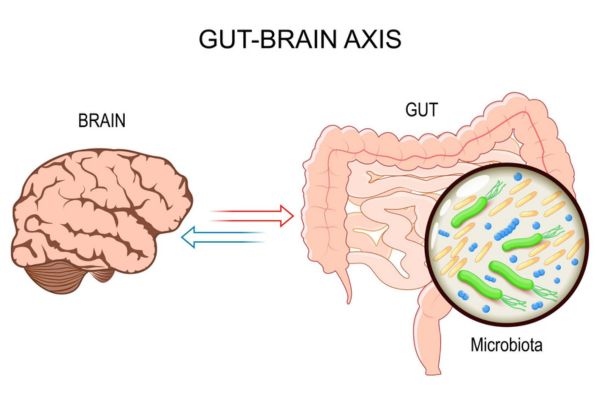
The relationship goes in both directions. Stress can increase magnesium loss, while low magnesium status may make the stress response harder to regulate. Researchers have described this relationship as a potential vicious circle. pmc.ncbi.nlm.nih.gov
When someone faces sustained pressure, the body’s demands and losses may change. If magnesium intake or status is already low, that may complicate the picture.
However, this loop should not become a diagnosis. Feeling stressed does not prove you are magnesium deficient. Likewise, feeling better after taking magnesium does not establish a deficiency.
What Supplementation Research Can Tell Us
The research cited on my Stress Recovery page also deserves context.
Some studies have reported lower perceived stress after eight weeks of supplementation in stressed adults with low magnesium. In addition, a systematic review examined magnesium and subjective anxiety in vulnerable groups. Another trial studied vitamin B6 added to magnesium.
These findings concern nutrients, rather than my specific formulas. They are also most relevant to the populations studied, including people with low magnesium status or high stress.
Importantly, researchers used self-reported questionnaires. Those measures describe how participants experienced their symptoms. They do not, by themselves, establish that a nutrient treated a medical condition.
Nutrition Is Part of the Picture
The practical point is that the body needs adequate nutrition to carry out its normal functions.
Magnesium is one part, and in my view a big part, of that picture. Alongside it belong sleep, food, deep breathing, movement, relationships, and the many other influences on our response to everyday demands.
What the Maui ReSet Pilot Saw in Stress Recovery
In my six-month Maui ReSet pilot, we tracked stress recovery through TruDiagnostic’s TruHealth panel.
The study involved ten participants. Because it was observational, without randomization or a control group, its results help us ask questions rather than establish cause and effect.
Seven of the ten participants improved their stress recovery marker over six months.
The marker is an epigenetic signature associated with stress biology. The panel reports it as a percentile from 0 to 100, with a higher percentile described as more favorable.
However, that percentile is not a diagnosis. Nor does it directly measure how calm someone might feel during the holidays.
Instead, it is a marker to observe over time, alongside the person’s circumstances and other information.
Emily’s and Claudia’s Results
Emily, age 48, had the largest single shift in the pilot. Her stress marker moved from the 11th to the 81st percentile.
Meanwhile, she experienced a demanding six months that included a relationship breakup and a serious health event. The protocol did not remove those stresses. Her marker nevertheless changed during that period, although we cannot determine why from this study.
Claudia, age 53, moved from the 28th to the 61st percentile. She also reported the largest reduction in symptoms in the group.
Those changes may have occurred alongside one another, but we cannot assume that one explains the other.
Why the Mixed Results Matter
Stress readings fell in some participants, who also experienced considerable stress in their lives.
However, the pilot cannot establish what caused those declines or why participants responded differently.
For me, its value lies in observing people while they live their actual lives. The findings give us a reason to keep studying stress recovery, while remembering that another person may have a different result.
The Nutrients on My Stress Recovery Page
On my Stress Recovery page, I describe magnesium as the foundation of a broader nutrient picture.
ReMag® leads, with ReAline® in support. Meanwhile, Pico Potassium® contributes to normal fluid balance and nerve signaling.
ReMag provides stabilized magnesium ions described in the formula information as picometer-sized. ReAline supplies food-based and methylated B vitamins, including B6, along with L-taurine and L-methionine.
These formulas were part of the seven-formula foundation followed in the Maui ReSet pilot. Their intended focus is normal nervous-system function and the body’s normal stress response.
However, because participants used the formulas together, the pilot cannot isolate the effects of any individual product.
You can read more on the ReMag, ReAline, and Pico Potassium formula pages.
Magnesium participates in energy production, muscle function, nerve signaling, and hundreds of enzyme processes. Ultimately, this nutrient story is about supporting normal function.
Two Books for the People Who Carry a Lot
Sometimes the most useful gift is not another thing to do. Instead, it is something that gives a person room to learn, reflect, or understand their health more clearly.
Two of my books offer different ways into these subjects.
Magnesium: The Missing Link to Total Health
This book explores magnesium’s role in energy production, muscle function, mental health, and its relationship with other nutrients.
My aim is to help readers understand why magnesium participates in so many body processes. It also explains why I have spent so much of my work discussing it.
I have written about how magnesium deficiency can sometimes resemble other conditions. However, that is my perspective as an author and clinician, rather than an invitation to diagnose yourself from a symptom list.
The book page lists paperback and digital formats. If you want to explore the mineral more deeply, look for Magnesium: The Missing Link to Total Health.
The Complete Guide to Mental Health: A Total Body Approach to Emotional Well-Being
This book takes a broader look at emotional well-being, including the relationship between physical and mental health.
Its description presents natural strategies for emotional resilience and positions the book as a complement to conventional care.
I think that whole-body perspective can be valuable. At the same time, emotional health is complex.
A book, nutrient, or lifestyle change should not be presented as a substitute for treatment for anxiety or depression. If someone is struggling, professional support matters.
You can read the description under The Complete Guide to Mental Health. The page describes it as available free to members and as an Amazon eBook.
These can be useful gifts for someone stretched thin: a book, a handwritten note, and a reminder that they do not have to do everything alone.
If someone in the United States is experiencing a mental health crisis, they can call 988 or text 988 to reach the Suicide & Crisis Lifeline. In an immediate emergency, contact local emergency services.
One Calm Thing to Do This Week
Before the holiday list grows another page, try three small questions.
What Is One Thing I Can Remove?
Perhaps it is a task, an extra decoration, or an expectation that does not need to be met this year.
Sometimes making room begins with deciding what can wait.
Who Is One Person I Can Ask for Help?
Be specific. For example, ask someone to bring a dish, pick up an item, or take responsibility for one task.
A clear request can be easier to answer than a general plea for help.
Is There a “Deep Breath” I Can Take Each Day?
It might be a few quiet minutes, a short walk, or simply sitting down in prayer or appreciation before moving to the next task.
These are mindful ideas, without needing to become another set of rules. Instead, they offer practical ways to make a little room in a busy season.
I also want to remind you that caring for yourself does not mean feeling cheerful all the time.
You can enjoy the holidays and still miss someone. Likewise, you can feel grateful and still need help. You can love your family and still need a boundary.
That is not a failure of resilience. It is being human.
A Little More Room for the Season and Yourself
When I discuss magnesium and stress, I am talking about one part of a much larger picture.
Magnesium participates in normal nervous-system function. The relationship between stress and magnesium status is worth understanding, but it does not explain every difficult feeling or circumstance.
The most useful message I can offer is simple: support your body without making yourself responsible for controlling everything around you.
Nutrition matters. So do rest, connection, practical help, and permission to let something go.
If you would like to learn more, read my Stress Recovery page and explore either of the books discussed here.
On November 26, I’ll turn to Thanksgiving gratitude, with a look at minerals and electrolytes. We’ll also consider the small things that help us appreciate the people and moments that make a season meaningful.
This content is for educational purposes only and discusses nutritional and lifestyle support for normal structure and function of the body. It is not intended to diagnose, treat, or cure disease. Consult a qualified healthcare professional for personal medical guidance.
👉 Learn more and become a member here:
https://drcarolyndean.com/wellness-courses/