From the Desk of Carolyn Dean MD ND
The nutrient that supports those scrapes, sprains, and achy growing joints. It’s not the one in the sideline cooler.
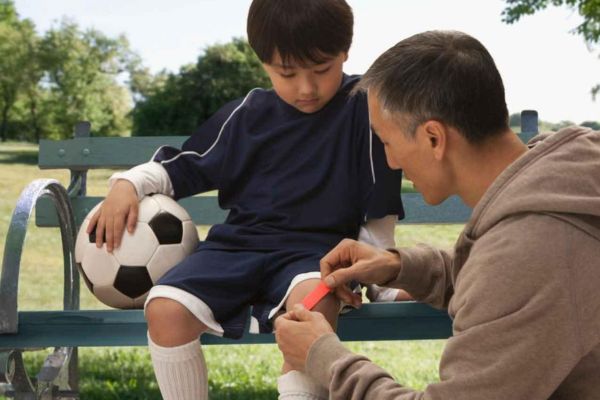
Turf burns. Rolled ankles. A scrape that just won’t close up. Fall sports season is here, where football is even hitting junior high. And with it comes a predictable wave of minor injuries.
There’s a nutrient doing quiet, essential work in every single one of them: Vitamin C.
I know that when the weather turns and school sports begin, the family routine changes overnight. Muddy cleats appear by the door. Practice schedules take over the refrigerator. There are games to get to, uniforms to wash, and a sideline cooler that seems to contain every electrolyte drink known to humanity.
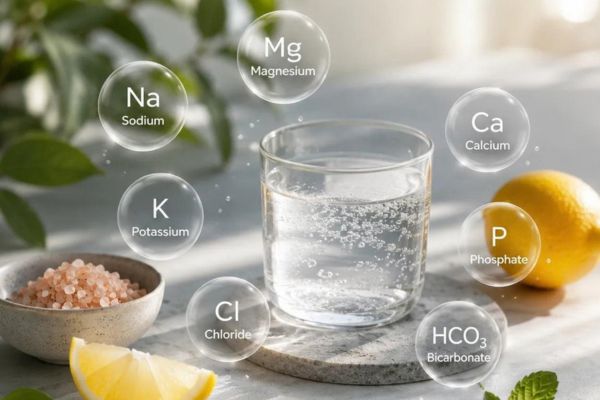
Hydration certainly matters. However, this isn’t another hydration article. You can read those here (LINK).
Instead, I want to talk about what happens after the activity stops, when the body has to repair the tissues that have been scraped, stretched, bruised, bumped, and stressed.
Because while ice packs and bandages have their place, they’re far from the raw materials your body uses to rebuild tissue.
One of those raw materials is our very own Vitamin C.
Vitamin C for Sports Recovery: The Scrape That Won’t Close
Let’s enumerate the minor injuries.
A child slides across artificial turf and comes home with a raw patch of skin. Someone catches an ankle awkwardly. A blister becomes irritated. A bruise appears after what seemed like an ordinary collision.
For parents, the response is usually automatic: clean it, cover it, ice it, rest it, and keep an eye on it.
That’s sensible first aid. However, there’s another side to recovery that happens underneath the bandage.
Your body has to construct new tissue.
Whenever tissue is damaged, the body launches a coordinated repair process. Cells have to multiply. Structural proteins have to be produced and deposited. In addition, new blood vessels have to develop so that nutrients and other necessary resources can reach the area being repaired.
This is not simply a matter of putting a bandage over a wound and waiting.
Your body is actively rebuilding.
And Vitamin C has a role in several parts of that process.
What’s Actually Happening When a Wound Heals?
Wound healing is a remarkably organized process.
One of the important steps involves fibroblasts, cells that contribute to the production of the connective tissue framework needed for repair.
Collagen is a major part of that framework. After all, it comprises 30% of all body protein.
As the body repairs damaged tissue, new collagen is produced and deposited. At the same time, new blood vessels form through a process called angiogenesis, helping provide the developing tissue with the nutrients and oxygen it needs.
Vitamin C is required for important steps in collagen formation and tissue repair.
This is one reason we can’t think of Vitamin C simply as the “cold and flu vitamin.” Its biological responsibilities extend well beyond the immune system.
In fact, it participates in the chemistry involved in maintaining and repairing connective tissue throughout the body.
That includes skin, blood vessels, bones, teeth, tendons, ligaments, and other tissues that depend on a healthy collagen structure.
So, when you’re looking at Vitamin C for sports recovery, wound healing, and tissue repair, I want you to think less about a particular product and more about the underlying biology.
The body has a well-designed repair process.
Vitamin C is one of the nutrients that process must have.
The Collagen Connection Nobody Mentions
Collagen is sometimes treated as though it’s simply a beauty ingredient because we hear so much about it in connection with wrinkly skin.
But collagen is much more fundamental than that.
Like I said, it’s one of the body’s major structural proteins.
Your skin contains collagen, about 75%. Your tendons contain collagen, actually 60% to 85% collagen by dry weight. And your ligaments contain about 70% collagen.
Collagen contributes to the structure of connective tissues throughout the body. Therefore, anything affecting collagen formation can have implications far beyond appearance.
Vitamin C is a required cofactor for the enzymes prolyl hydroxylase and lysyl hydroxylase, which are involved in the formation and stabilization of collagen being made from the amino acids glycine, proline, and hydroxyproline.
In other words, Vitamin C isn’t just something the body uses to put a bow on collagen after it has already been made.
It is a necessary part of the biochemical machinery involved in making functional collagen in the first place.
That’s an important distinction.
In Total Body ReSet for Athletes, I describe Vitamin C as assisting in the growth, maintenance, and repair of tissues, including the skin, blood vessels, bones, and teeth, and as being necessary for wound healing.
When I think about fall sports, that broad tissue repair role makes much more sense to me than thinking only about the latest recovery drink.
After all, the athlete doesn’t just need to replace what was lost during practice. The body also needs the nutritional building blocks involved in maintaining the tissues that are being asked to perform.
“Scurvy Rheumatism”: When Joint Pain Is More Than Growing Pains
Here’s a term from my Vitamin C deficiency material that has always caught my attention: “scurvy rheumatism.”
It describes joint pain and swelling associated with low Vitamin C status, involving hemorrhages in synovial tissue where collagen is weakened.
Now, I want to be very clear about how I would use that information as a parent.
Not every achy knee or sore ankle in an active child is because of low Vitamin C.
Young athletes put tremendous demands on their bodies. Therefore, sports injuries, overuse, and normal developmental changes all have to be considered.
But nutrition is a major piece of the puzzle.
If a young athlete repeatedly complains about unexplained joint discomfort, particularly when there isn’t an obvious injury to account for it, that’s something worth discussing with an appropriate healthcare professional rather than simply dismissing it as “growing pains.”
Likewise, an actual sports injury deserves proper evaluation.
The purpose of understanding Vitamin C’s role is not to diagnose an injury from a nutrition article.
Instead, it’s to understand that connective tissue has nutritional requirements, just as every other tissue in the body does.
Bruising Easily? Here’s the Blood Vessel Piece
There’s another familiar fall sports problem that brings Vitamin C into the conversation: bruising.
Anyone who has spent time around active children knows how quickly a new bruise can appear.
Sometimes it seems as though an athlete can bump into something and produce a bruise and forget they even had an encounter with a doorway.
Vitamin C supports the structural integrity of small blood vessels. When Vitamin C status is low, capillaries can become more fragile, making bruising easier to occur from ordinary bumps.
And notice how this connects back to the collagen story.
We’re not talking about an entirely separate Vitamin C function. Instead, the structural integrity of blood vessels also depends on connective tissue components, including collagen.
So, we have the same basic nutritional story appearing in different places:
- Skin needs structural support.
- Connective tissue needs structural support.
- Blood vessels need structural support.
- Tendons and ligaments depend on connective tissue.
And Vitamin C participates in the formation and maintenance of that structure.
That’s why I think it’s more useful to understand the mechanism than to memorize a list of isolated “Vitamin C benefits.”
Building a Recovery Kit That Actually Supports Repair
When fall sports begin, most households naturally assemble a recovery kit: bandages, antiseptic supplies, ice packs, athletic tape, perhaps compression gear, and whatever else the particular sport requires.
But what’s missing?
Are we providing the nutritional building blocks the body uses for normal tissue maintenance and repair?
Food is always an important foundation. A varied diet provides Vitamin C along with many other nutrients involved in normal tissue function.
However, for people who want an additional nutritional source, Whole C ReSet, my organic Vitamin C complex, is one option to consider as part of a normal post-practice routine.
I don’t look at Vitamin C as a magic recovery button.
Instead, I look at it as one of the nutrients involved in the body’s existing repair machinery.
That’s a much more grounded way to approach nutrition.
And remember that a sports recovery routine is about more than any one nutrient. Adequate food, fluids, sleep, rest between demanding activities, and appropriate medical attention when an injury occurs all matter.
Vitamin C is one piece of that larger picture.
Recovery Starts With Giving the Body What It Needs
Fall sports are supposed to involve some bumps and scrapes. That’s part of being active.
However, the body still has to do the work of repairing the tissues affected by all that activity.
Vitamin C for sports recovery is part of that process because Vitamin C participates in collagen formation, connective tissue maintenance, blood vessel structure, and normal wound healing processes.
That’s the story I want parents and active adults to remember.
Not “Vitamin C fixes injuries.”
Rather: Vitamin C is one of the nutrients your body uses to maintain and repair tissue.
And that’s a very different and much more useful way to think about recovery.
If an injury involves significant swelling, an inability to bear weight, substantial pain, or symptoms that aren’t improving, it should be evaluated by a medical professional.
Nutrition can support normal body functions, but it isn’t a substitute for appropriate injury assessment and care.
Ultimately, for everyday nutritional support, fall is a good time to look beyond the sideline cooler and back toward the basics.
Explore Whole C ReSet. Support the tissue repair process behind every scrape, sprain, and bruise.
This content is for educational purposes only and discusses nutritional and lifestyle support for normal structure and function of the body. It is not intended to diagnose, treat, or cure disease. Consult a qualified healthcare professional for personal medical guidance.
👉 Learn more and become a member here:
https://drcarolyndean.com/wellness-courses/