From the Desk of Carolyn Dean MD ND
Kids on restrictive diets are being worked up for arthritis and vasculitis before anyone checks a centuries old deficiency.
A nine year old girl arrives with ankle pain, swelling, and bruising that has been going on for several days. There is a small amount of fluid around one knee. Tiny spots of bleeding appear on the roof of her mouth. Her medical history includes an episode of severe anemia two years earlier that required a blood transfusion.
So, the doctors start looking for an explanation.
They order imaging and perform laboratory testing. Next comes the poking and prodding. The investigation includes possibilities such as vasculitis, lupus, inflammatory bowel disease, and chronic nonbacterial osteomyelitis.
The symptoms are real, and the findings are concerning. Therefore, the doctors appropriately conduct a thorough diagnostic workup.
Then something much older than any of those diagnoses enters the picture.
Testing shows undetectable Vitamin C and Vitamin K levels. Her diet consists largely of crackers, noodles, and potato chips.
The diagnosis is scurvy.
According to the case presented at the American College of Rheumatology’s 2026 Pediatric Rheumatology Symposium, her symptoms resolved after she received Vitamin C and Vitamin K. (ACR Abstracts)
Scurvy sounds like ancient pirate ship history. It isn’t. Modern scurvy and Vitamin C deficiency still occur, and you don’t have to be anywhere near that severe to be affected by the same underlying nutritional gap.
That is what I want parents to understand.
Modern Scurvy and Vitamin C Deficiency Can Look Like Arthritis
When I first started looking closely at modern cases of scurvy, what struck me wasn’t simply that Vitamin C deficiency still occurs. It was how easily its symptoms can look like something else.
Joint pain. Swelling. Bruising. Bleeding. Anemia. Difficulty walking. Abnormal inflammatory markers.
Those are not symptoms that immediately make most people think, “Vitamin C.” Instead, they can send a child into an entirely different diagnostic pathway.
And this isn’t just one unusual case.
In a 2020 case series published in The Journal of Pediatrics, researchers described 10 patients with scurvy who had been evaluated by pediatric rheumatology. As already mentioned above, their symptoms and laboratory findings could mimic juvenile idiopathic arthritis, vasculitis, and chronic nonbacterial osteomyelitis.
Eight of the patients had developmental delay or autism, and the authors highlighted restricted food intake as an important part of the clinical picture. (ScienceDirect)
Why Dietary History Matters
I want to pause here because the dietary history is important, but it should never become a source of judgment.
You can find a highly selective eater in any household for many different reasons. Feeding challenges are complicated, and telling a parent to “just make the child eat vegetables” isn’t useful advice.
Instead, what is useful is recognizing that a very narrow diet can create nutritional gaps even when a child is eating enough calories.
That distinction matters enormously.
Scurvy Isn’t a One Off, It’s a Pattern
Once you start looking for modern cases, a pattern emerges. And it’s not just in children.
In 2011, Mertens and Gertner reported three adults who went for rheumatologic evaluation because of symptoms including fatigue, purpuric (broken blood vessels) rash, joint swelling, anemia, and elevated inflammatory markers.
Ultimately, doctors traced their cases to scurvy associated with inadequate dietary Vitamin C. The authors specifically noted that scurvy can occur in affluent countries and that patients may present with rheumatologic symptoms. (PubMed)
I often talk about the elderly men and women who show up at our Oko’a Farm stores with bruising up and down their arms from minor trauma. I am being dramatic, but I call that scurvy. Or the bad breath from bleeding gums. I call that scurvy due to Vitamin C deficiency.
Back to the pediatric cases.
A 2018 report by Harikrishnan and Balan described two children whose scurvy initially mimicked juvenile idiopathic arthritis. Both had difficulty walking. One child had autism. Both children ate a limited amount of fruits and vegetables.
After Vitamin C supplementation, symptoms in both children resolved within 24 to 48 hours.
Therefore, the authors emphasized the importance of considering nutritional causes when children present with lower extremity pain and difficulty with weight bearing. (Sage Journals)
The common thread isn’t pirate voyages or nineteenth century shipboard rations. Instead, one thread is highly restrictive or selective eating patterns that many children, and adults, experience.
The Number That Should Make Us Pay Attention
There is another reason I don’t think Vitamin C belongs in the “old fashioned deficiency diseases” category.
A 2021 analysis of U.S. NHANES data found that 41.8% of adults in the analyzed population had plasma Vitamin C levels classified as insufficient, combining deficiency, hypovitaminosis, and inadequate levels.
Importantly, the underlying NHANES data came from 2003 to 2006. Therefore, we should not interpret this as a current 2026 prevalence estimate. (PubMed Central (PMC))
And the issue is not limited to the United States.
A much newer 2024 modelling analysis published in The Lancet Global Health estimated that, based on food intake and excluding fortification and supplementation, more than 4 billion people, about 53% of the global population represented in the analysis, had inadequate dietary Vitamin C intake.
However, this is a modelled estimate of intake inadequacy, not a measurement of clinical scurvy. (ScienceDirect)
Those are two very different things, and I want to keep them separate.
Inadequate intake is not the same as diagnosed scurvy.
Even so, both pieces of research reinforce why I think it is worth paying attention to the nutritional foundation of the diet.
The Scurvy Spectrum: Deficiency Doesn’t Begin in the Emergency Room
This is where my own Scurvy Spectrum framework becomes useful as an educational tool.
I think of Vitamin C status on a scale from severe scurvy at one end to full Vitamin C saturation at the other. The important point is that there is a great deal of territory between those extremes.
In the middle of that spectrum, you aren’t necessarily looking at the dramatic textbook picture of scurvy.
Instead, you may be looking at things that are remarkably easy to dismiss: muscle or joint aches, cuts that seem slow to heal, occasional nosebleeds, mild fatigue, changes in mood, minor skin dryness, or seeming susceptibility to ordinary illnesses.
I had constant nosebleeds as a child. It would have helped immensely if my nurse mother or my doctor knew about Vitamin C.
However, none of these symptoms, by themselves, tells you that you or your child has Vitamin C deficiency. That’s not what this scale is for.
I use it as an educational tool to help define nutritional sufficiency, not as a diagnostic test. If there is a genuine concern about a child’s symptoms or diet, that is a conversation for a pediatrician or other qualified healthcare professional.
But I do want parents to recognize the larger principle: nutritional problems don’t necessarily begin with dramatic symptoms.
Why Vitamin C Deficiency Can Look Like Everything Else
To understand why modern scurvy and Vitamin C deficiency can imitate rheumatic disease, you have to understand what Vitamin C actually does.
Vitamin C helps the body form and stabilize collagen, the structural protein that gives strength to tissues throughout the body.
Collagen plays an important role in skin, blood vessels, gums, bone, and connective tissue, including the tissues associated with joints.
When problems interfere with collagen formation, manifestations can include easy bruising, bleeding, impaired wound healing, and musculoskeletal symptoms.
Now imagine being a physician looking at a child with joint pain, swelling, bruising, abnormal inflammatory markers, and difficulty walking.
Those symptoms deserve investigation.
Why These Cases Can Be Difficult to Recognize
And that’s precisely why the published cases are so instructive. The problem isn’t that doctors should stop looking for inflammatory or rheumatic disease. Instead, nutritional history can also be an important piece of the differential diagnosis.
In fact, the 2020 pediatric case series specifically described how scurvy’s clinical, laboratory, and imaging features could mimic rheumatic conditions. (ScienceDirect)
Vitamin C has other important biochemical responsibilities as well. It participates in immune cell function and supports enzymes involved in carnitine synthesis, connecting Vitamin C status to normal cellular energy production.
So, fatigue appearing alongside other nutritional symptoms isn’t particularly mysterious when you understand the underlying biology.
The Question I Would Add to the History
There is one very simple question I wish we asked more often when evaluating unexplained symptoms:
“What does this child actually eat?”
Forget what the parent wishes they ate.
Set aside what the school lunch program offers.
Don’t rely only on what appears in the nutritional guidelines.
Instead, ask what actually goes into the child’s mouth on an ordinary day.
Does the diet contain fruits and vegetables?
Are there foods providing Vitamin C regularly?
Has the list of accepted foods become extremely small?
Perhaps entire food groups are missing.
A diet can look adequate on paper while being surprisingly narrow in practice.
And this is why I think dietary history belongs alongside the other pieces of the medical history, not instead of them.
If you read my recently published book, Vitamin C: Listening to the Experts, you’ll also learn that we humans don’t produce our own Vitamin C. Therefore, we depend on diet and supplements to avoid the subclinical and clinical symptoms of scurvy.
A Simple Fall Kitchen Check for Vitamin C
October is a particularly good time for this conversation because we’re well into the school year and heading into cold and flu season.
Rather than approaching this with alarm, I would make it a simple household check.
First, look at the foods your family actually eats.
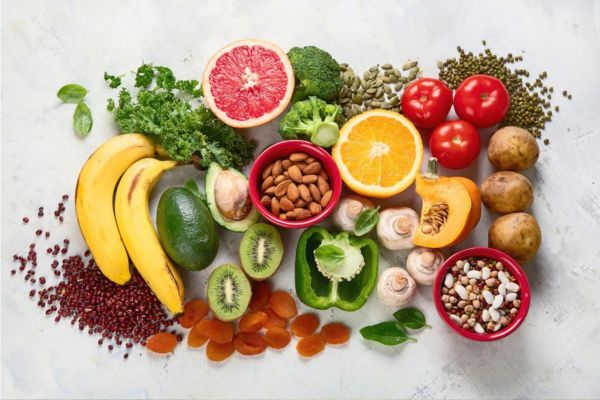
For Vitamin C, that might mean citrus fruits, strawberries, kiwi, bell peppers, or other foods a child will reliably accept.
With a highly selective eater, the goal isn’t perfection. Instead, it is finding realistic ways to broaden nutritional coverage over time.
And if a child’s accepted food list is very limited, it’s reasonable to discuss potential nutritional gaps with a healthcare professional or registered dietitian who understands pediatric nutrition.
When Food Choices Are Very Limited
For families looking for an additional nutritional option, Whole C ReSet provides an organic, food based Vitamin C complex containing acerola, tart cherry, and a whole fruit complex.
I see it as one option for supporting Vitamin C sufficiency when getting enough through food is difficult, not as a treatment for scurvy or a substitute for medical care.
This formula comes in capsule form, and you can open it into a smoothie.
Another option is our Vitamin C ReSet Berry Powder, which can go into water as a flavored drink.
Finally, if the diet is restricted for whatever reason, our ReStructure protein powder has added Vitamin C and can make a delicious smoothie with some fresh fruit added.
That distinction is important.
Modern Scurvy Is a Reminder to Look at Nutrition
As mentioned, my book, Vitamin C: Listening to the Experts, goes much further into the history, biochemistry, deficiency spectrum, and research behind this remarkable nutrient. What I want to do here is simply open the door to a larger conversation.
Because Vitamin C is so much more than the nutrient we remember when someone starts coughing and sneezing.
Overt scurvy is rare, but Vitamin C nutrition is also rare and must be explored.
And when a child has a highly restricted diet, unexplained symptoms deserve consideration in the full context of that child’s nutrition, history, and medical evaluation.
Ultimately, modern scurvy and Vitamin C deficiency remind us that nutritional problems can still occur even when the deficiency disease itself sounds like something from the history books.
This is an educational discussion, not a diagnostic tool. If you have concerns about your child’s symptoms, diet, growth, or nutritional status, talk with your pediatrician or another qualified healthcare professional.
Sometimes the most useful question isn’t the newest one.
Sometimes it’s the one we’ve simply stopped asking.
Explore Whole C ReSet, an organic, whole food Vitamin C complex, or Whole C ReSet Powder or ReStructure protein powder, all built for households (and eaters) who need an easier way to close the gap.
This content is for educational purposes only and discusses nutritional and lifestyle support for normal structure and function of the body. It is not intended to diagnose, treat, or cure disease. Consult a qualified healthcare professional for personal medical guidance.
👉 Learn more and become a member here:
https://drcarolyndean.com/wellness-courses/