From the Desk of Carolyn Dean MD ND
A Body-Based Approach to Nervous System Balance
How are your stress levels as we close out the first month of 2026?
First, let me give you the definition of somatic – it simply means “relating to the body” as opposed to relating to the mind.
In my book The Complete Guide to Mental Health, I share my mind–body approach to mental wellness—nutritional and supplement guidance alongside lifestyle tools—to help calm an agitated nervous system and support people living with chronic stress, anxiety, overwhelm, and depression.
While the term somatic healing is currently trending—viral videos reaching millions of views—I’ve been teaching a holistic approach to mental health for decades. Long before it became popular online, I’ve educated people about how stress and trauma are stored in a vulnerable body when the nervous system lacks the minerals it needs to reset and regulate itself.
Many influencers now offer quick somatic tools that may provide temporary relief beyond talk therapy. But most online sources don’t tell the whole story. These topics are trending because people are realizing that despite everything they’re doing to support their mental health, they still don’t feel well—physically or emotionally.
What Somatic Healing Really Addresses
Somatic healing focuses on the physical body’s role in expressing experiences and emotions. It brings awareness to bodily sensations associated with stress and trauma that become trapped in the nervous system and result in physical symptoms. Through relaxation and release techniques, somatic practices aim to calm fight, flight responses that have become chronically activated—often showing up as tension, discomfort, or anxiety-related symptoms.
Most people recognize how stress lives in the body:
- Jaw clenching and tension
- Tight neck and shoulders
- Shallow breathing
- Digestive tension
But here’s a question I ask in several of my books:
How do we transition from being calm and regulated to anxious and fearful?
In my view, the answer lies in a gradual—but chronic—depletion of nutrient reserves.
Why Stress Is Stored in the Body, Not the Mind
Stress is not a personal failure. It’s a biochemical state.
When the body encounters stress—emotional, physical, injury-related, or infectious—it activates the fight-or-flight response. Stress hormones like cortisol and adrenaline surge. To manage this response, the body rapidly draws magnesium from its stores to regulate nerve firing, relax blood vessels, and mobilize energy. Much of this magnesium is then excreted through urine, leading to depletion.
If magnesium levels are already low, the nervous system struggles to shut the stress response off. This is how people become stuck in fight, flight, or frozen mode.
Magnesium Deficiency and Chronic Stress Patterns
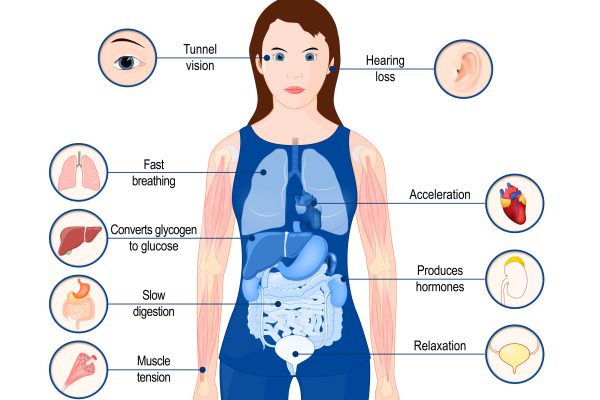
Ongoing stress continuously drains magnesium reserves, leaving the nervous system hyperexcitable and reactive. Common symptoms include:
- Anxiety, panic attacks, racing thoughts, irritability
- Insomnia or poor sleep quality
- Muscle tension, twitches, or cramps
- Heart palpitations
- Feeling “wired but tired”
- Heightened sensitivity to stress
The Stress–Magnesium Depletion Cycle
Low magnesium increases stress reactivity, which triggers more stress hormones—and further magnesium loss. Over time, this cycle can contribute to adrenal dysfunction, thyroid imbalance, brain hyperexcitability, depression, and persistent anxiety.
Magnesium is required for the proper release and binding of calming neurotransmitters and hormones. Without it, the nervous system remains in a heightened, unbalanced state. This is why relaxation techniques and somatic exercises often provide only short-term relief when magnesium deficiency isn’t addressed.
You can’t breathe your way out of a mineral deficiency.
Magnesium: The Foundation of Somatic Healing for Stress Relief
The goal of somatic healing is a calm nervous system. But without adequate magnesium, results are often limited or temporary. Rebuilding magnesium levels—ideally with highly absorbable forms like my picometer-sized ReMag—helps restore balance by:
- Regulating cortisol and adrenaline
- Reducing nerve hyperexcitability
- Promoting relaxation and better sleep
- Supporting stress resilience
Tools like breathing, gratitude, EFT (tapping), and body awareness work are far more effective when the underlying physiological driver—mineral deficiency—is addressed. Diet alone often isn’t enough due to modern stress and depleted soils.
Magnesium Baths as a Somatic Stress-Relief Practice
A 20–30 minute magnesium bath (2 cups of Epsom salts) in warm water supports muscle relaxation, nervous system balance, and emotional regulation. When combined with slow breathing or gentle tapping, magnesium baths can deepen the effects of somatic practices.
Popular Somatic Tools—Enhanced by Magnesium
Somatic therapies often include:
- Conscious breathing
- Gentle shaking or vibration to release stored tension
- Body scanning to notice sensations like warmth, tightness, or tingling
These practices help regulate the nervous system—but without mineral repletion, stress patterns tend to return quickly.
Affirmations as Somatic Signals
Affirmations support the psychological and emotional layers of healing, while magnesium addresses the physiologic foundation. Chronic stress and mineral deficiencies can reinforce negative thought loops; affirmations help interrupt those patterns when the body feels safe and supported.
A magnesium bath often creates that sense of safety. Try repeating these affirmations while breathing slowly in your bath cocoon:
- My body knows how to relax and repair.
- I release tension with every breath.
- I am supported at the cellular level.
A Simple Somatic Reset Routine
Healing is cumulative, not instant. Consistent, intentional actions build new habits and support nervous system recovery. Try this routine during a magnesium bath or foot soak:
- Inhale for 4 seconds, exhale for 6
- Repeat affirmations that feel supportive in the moment
A Perspective Shift for Post-Pandemic Healing
I’ve been teaching mineral-based nervous system healing for decades—long before it became a trend. The pandemic amplified pre-existing stress, accelerated mineral loss, and pushed many people into deep emotional exhaustion.
Today, I continue to see lingering anxiety, brain fog, fatigue, and burnout. This is an opportunity to reframe healing—to include restorative remineralization as a foundational step.
True somatic healing begins when the body finally has the minerals it needs to feel safe.
This content is for educational purposes only and discusses nutritional and lifestyle support for normal structure and function of the body. It is not intended to diagnose, treat, or cure disease. Consult a qualified healthcare professional for personal medical advice.
Get Direction, Become a Member
Carolyn Dean, MD ND
The Doctor of the Future
Get the Full Cookbook
50+ Yeast ReSet recipes | 7-day menu | Shopping lists