
The Eight Systems of Healthy Aging
Lens: Eight SystemsAre you ready to embark on the Maui ReSet Protocol? See the Seven Formulas and the Dosing Schedule so you can do your own Maui ReSet Study.
Start the Protocol →
People don’t know how good they can feel until they become saturated with nutrients.
The eight systems, one foundation
Each system opens onto its own page, with the science, the nutrients that support it, and the people from the pilot whose six months brought it to life. Start with the one that sounds most like you.
Mitochondrial Function and Cellular Energy
Mitochondria are the tiny power plants inside your cells, turning the food you eat into ATP, the energy every tissue runs on. Output tends to slow with age, which shows up as fatigue and slower recovery. ATP is really Mg-ATP, because magnesium is necessary for ATP to exist.
Methylation and Epigenetic Age
Your DNA carries chemical tags called methyl groups that shift in number and pattern as you age, and the epigenetic clocks read about a million of them to estimate biological age. The chemistry that places and maintains those tags depends on folate, B3, B6, B12 and methionine.
Pace of Aging
Other clocks tell you the age of your body. DunedinPACE tells you how fast it is aging right now, the speedometer, where 1.0 means one year of aging per year and lower is better. It is sensitive enough to shift within months, so it often moves before the deeper clocks do.
Metabolic Flexibility
The ability to switch efficiently between two fuels, glucose from food and fat and ketones from storage, without energy crashes or cravings. A hypoglycemic crash would not happen if the body could shift over properly. That shift depends on magnesium and the B vitamins.
Cellular Repair and NAD+
Cells take incremental damage every day, and repair brings them back to baseline. Much of that work depends on NAD+, a vitamin B3 derivative that powers the repair crews restoring DNA. NAD+ declines with age, so keeping B3 and magnesium well supplied matters.
Stress Recovery
Your capacity to meet pressure and bounce back. A resilient system handles a hard day and settles down again rather than staying switched on. Magnesium sits at the center of that recovery, and stress burns through magnesium, so the two are linked in a loop.
Vitamin Sufficiency
Simply having enough in the body to power metabolic functions. As people age they most often fall short of vitamin D, the B vitamins and vitamin C, which are the raw materials for immune defense, DNA maintenance, collagen and energy.
Immune Resilience
Your capacity to defend against everyday threats and recover from them. Immune function tends to weaken with age, and there is even a name for it, immunosenescence. It leans heavily on zinc and vitamin D, which tend to run low in older adults.
These eight are the systems the TruHealth and Advanced TruAge panels reported on for this cohort. Nutrient links describe support for normal structure and function, not treatment of any condition.
Every system above draws on the same nutrient foundation, which we call The Maui ReSet Bundle: three core minerals and four supporting nutrients, the same seven studied in the Maui ReSet Pilot. Swipe to see each.

ReMag®
Picometer-sized stabilized magnesium ions. Magnesium is a required cofactor in 600 to 800 enzyme reactions, which is why it appears under nearly every system on this page.
Buy on rnareset.com View formula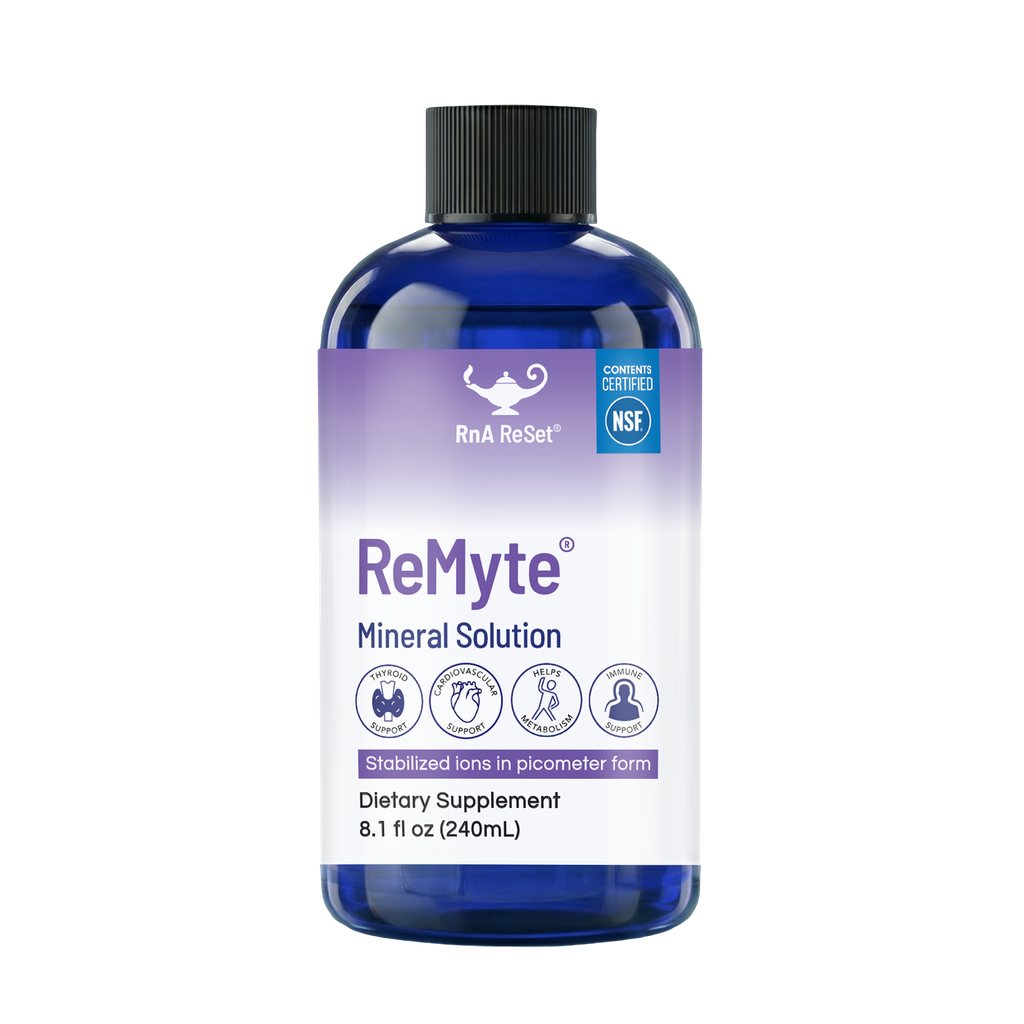
ReMyte®
Twelve picometer-sized stabilized mineral ions, replenishing the trace elements our cells quietly run short of with age.
Buy on rnareset.com View formula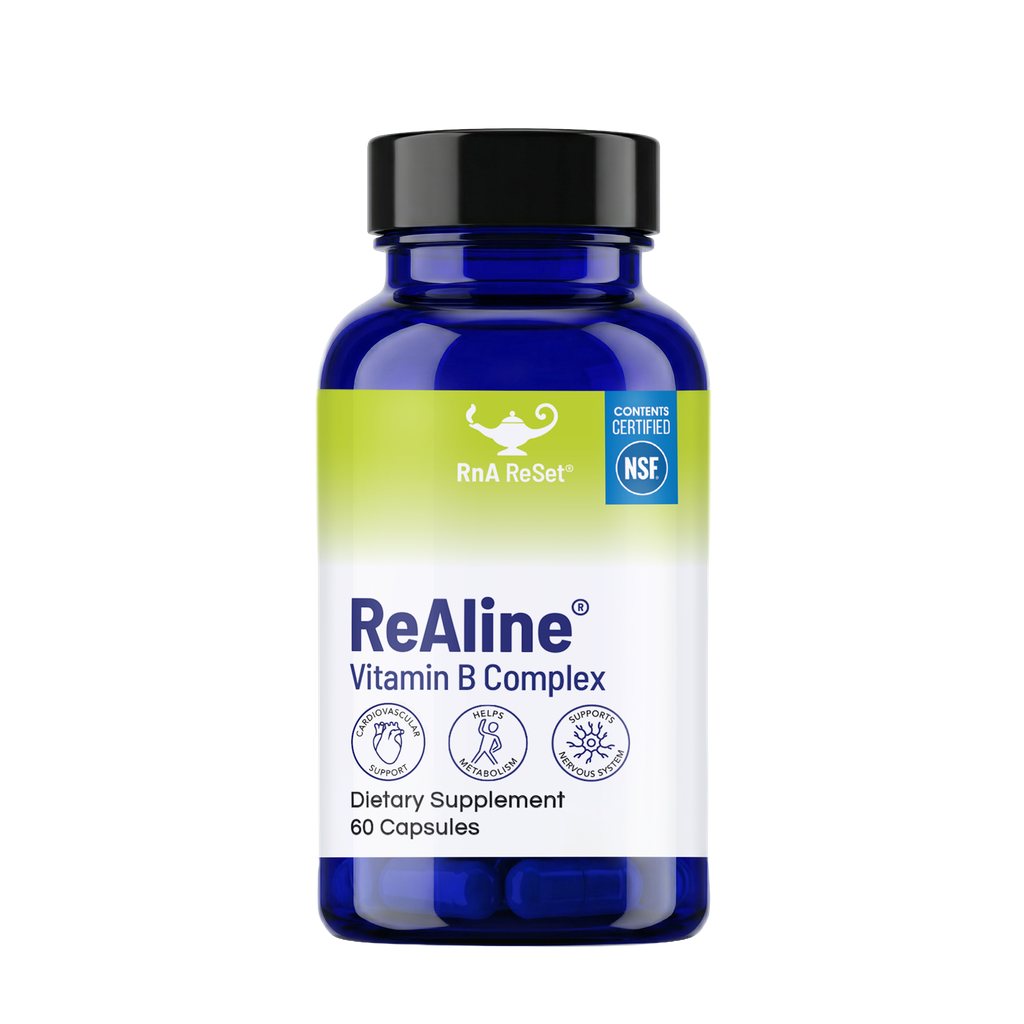
ReAline®
Methylated and food-based B vitamins that power methylation, plus two sulfur amino acids that support liver detoxification pathways.
Buy on rnareset.com View formula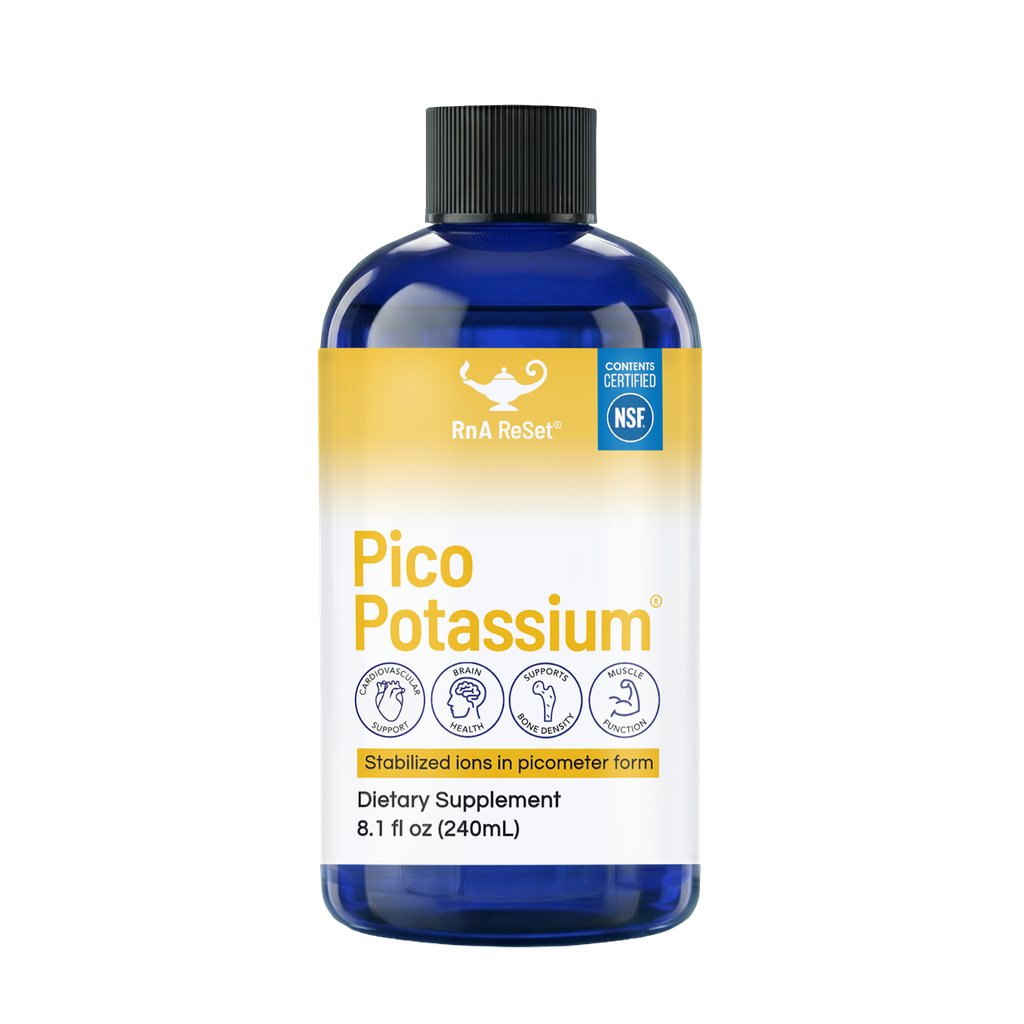
Pico Potassium®
Potassium is magnesium’s Bestie. They both support the heart, nerve and muscle health that matter more as we age.
Buy on rnareset.com View formula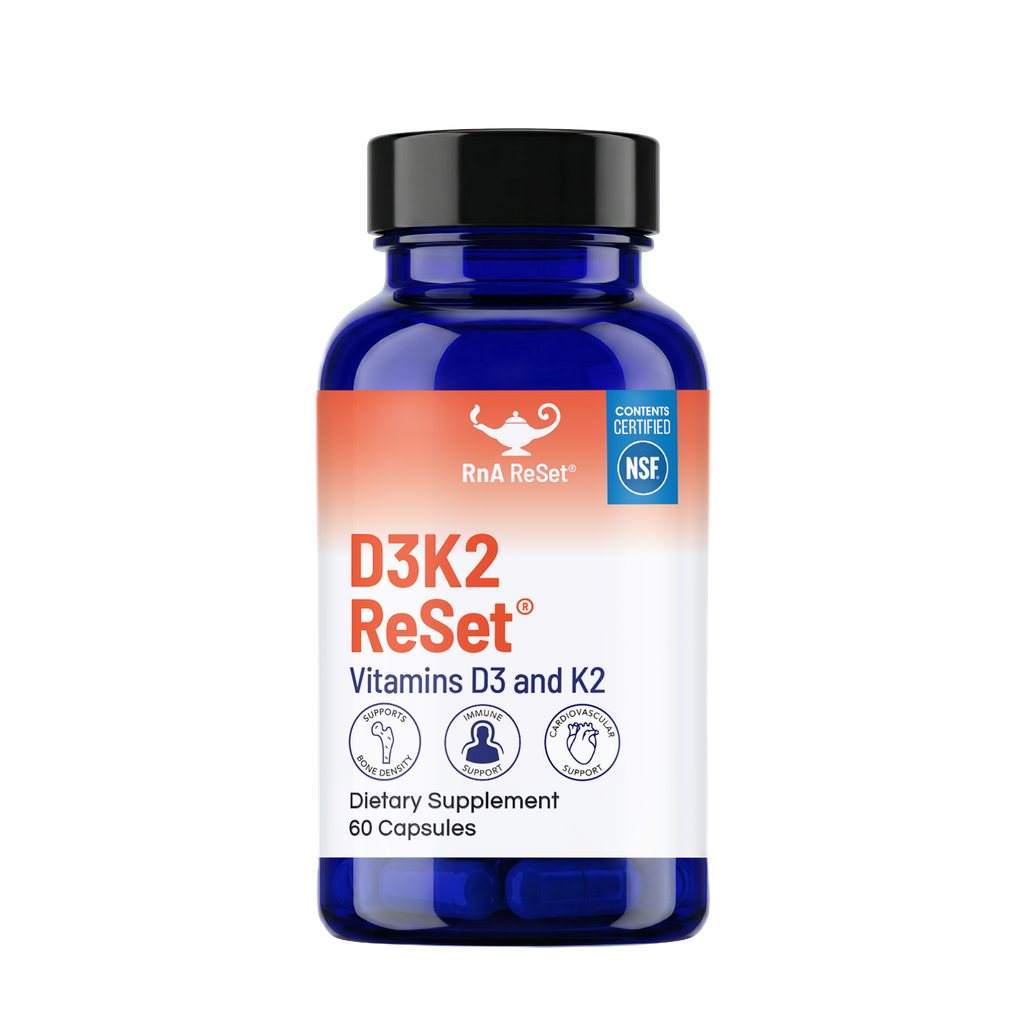
D3K2 ReSet®
Vitamins D3 and K2 working together to support bone strength and normal immune function. Vitamin D activation requires magnesium.
Buy on rnareset.com View formula
Pico Zinc Plus®
Balanced picometer-sized, stabilized zinc and copper ions for the enzyme activity and antioxidant defenses that immunity and healthy aging draw on.
Buy on rnareset.com View formula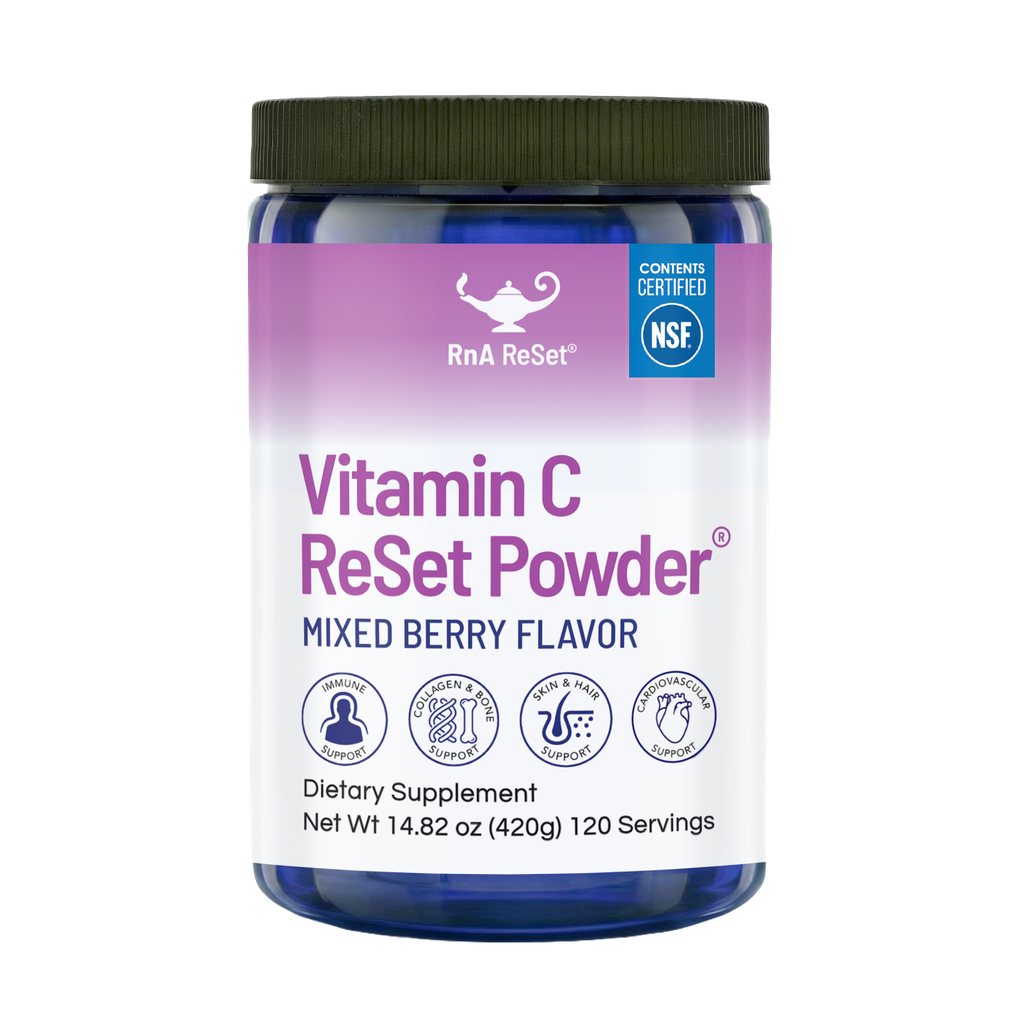
Vitamin C ReSet®
Antioxidant support and collagen production, which underpins blood vessels, connective tissue, skin and mucus membranes.
Buy on rnareset.com View formulaFormulated by Dr. Carolyn Dean. Made and sold by RnA ReSet. Purchased on rnareset.com.
Omega-3 Algae A+E and Flora ReVive are added separately for the second half of the protocol. Pico Silver is an optional addition.
Why one foundation reaches eight systems
The eight systems above are not eight separate problems with eight separate answers. They overlap, because the same handful of nutrients is required in all of them. Magnesium alone is a cofactor in 600 to 800 enzyme reactions, and even the NIH Office of Dietary Supplements notes its role in normal muscle, nerve and energy function. The methylated B vitamins feed the one-carbon chemistry that both the epigenetic clocks read and the liver uses to clear what it processes. Trace minerals sit underneath enzyme activity and antioxidant defense across the whole set. That overlap is why a broad daily foundation reaches further than feeding one system at a time.
Common questions
Why eight systems, and not some other number?
These are the systems the pilot could actually read. The TruHealth and Advanced TruAge panels reported on each of them for this cohort, before and after, so every page is tied to something that was measured rather than to a category we invented.
Which system should I start with?
Whichever one sounds most like your own experience. The systems overlap and share the same nutrient foundation, so there is no wrong door. If nothing stands out, start with Vitamin Sufficiency, since it is the layer the others are built on.
Why do the same formulas appear under system after system?
Because the same nutrients are required in all of them. Magnesium, trace minerals, the methylated B vitamins and the fat-soluble vitamins each support several systems at once. We are not feeding organs one at a time; we are supporting the chemistry every cell runs on.
How is this different from the Organ-Aging Map?
The Organ-Aging Map groups eleven organs into six Pillars and asks where in the body aging is concentrated. These eight systems ask a different question: which processes were measured in the pilot, and how did they move. The two are companion views of the same foundation.
Did every participant improve on every system?
No, and the pages say so. Some markers fell for some people, and the individual pages show those cases alongside the favorable ones with the confounders included. A small pilot with no control group is a reason to look closely, not a reason to claim more than the data supports.
One study, seen from every system
You have seen the systems. From here, meet the people behind them, follow the same daily path they did, and see the formulas at its center.

See the Pilot Study
Ten real people, six months, the biomarkers and the honest results.

Explore the Protocol
The guided daily routine built on seven nutrient formulas, run in two phases.

Meet the Maui ReSet Bundle
The seven-formula Maui ReSet Bundle, sold on RnA ReSet as the Cell Nutrient Stack, and the nutrients behind each one.